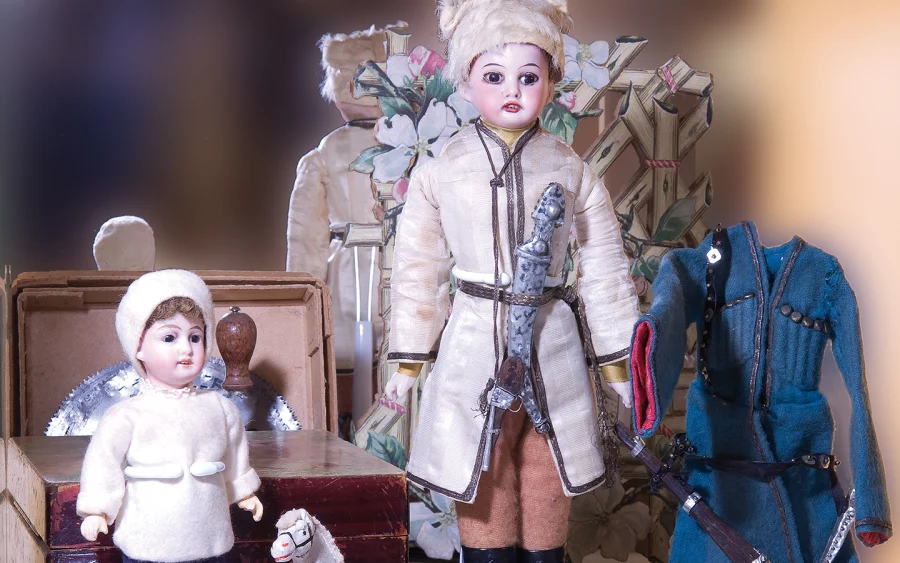
Private collection: Benno and Rita Allemann

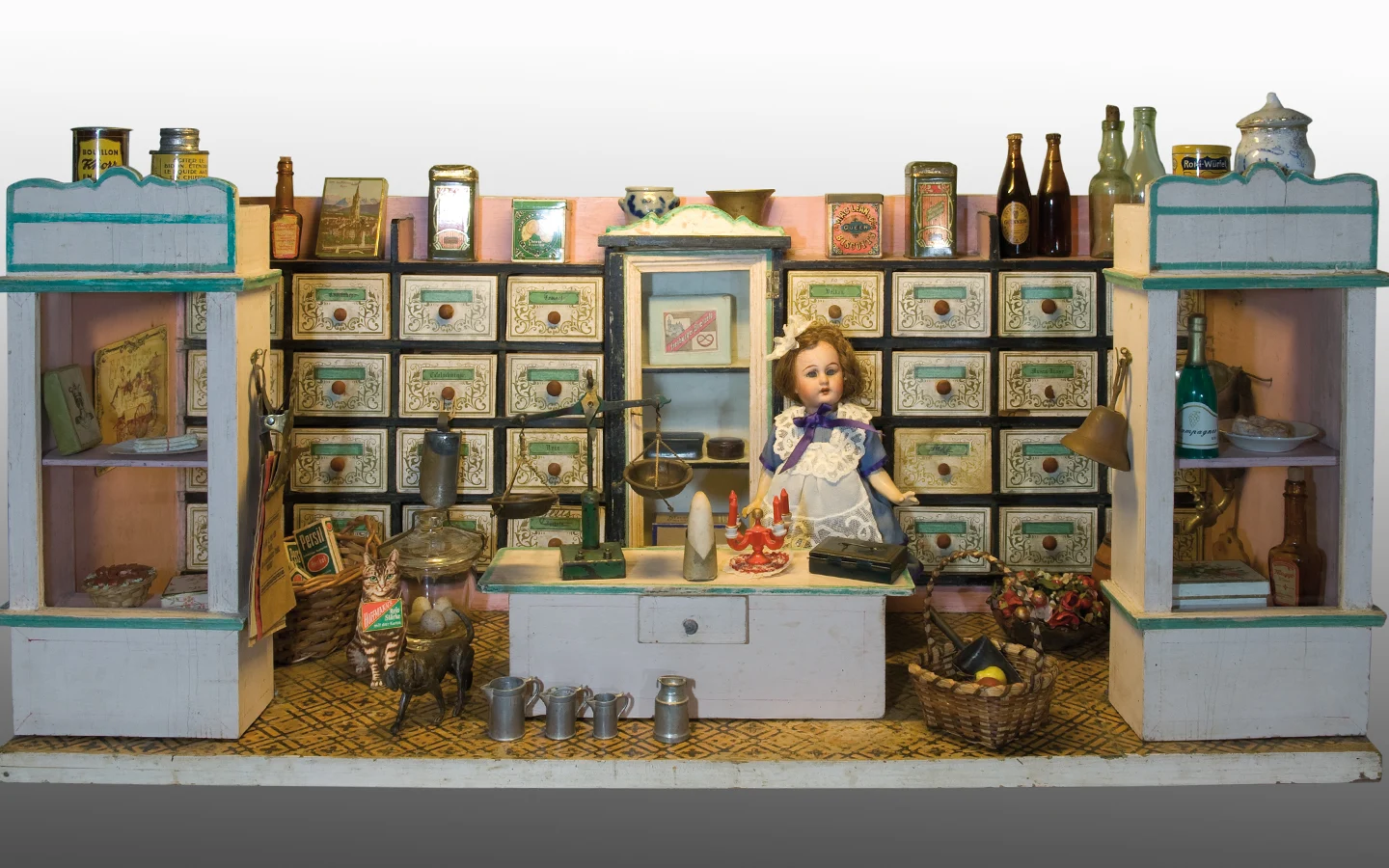
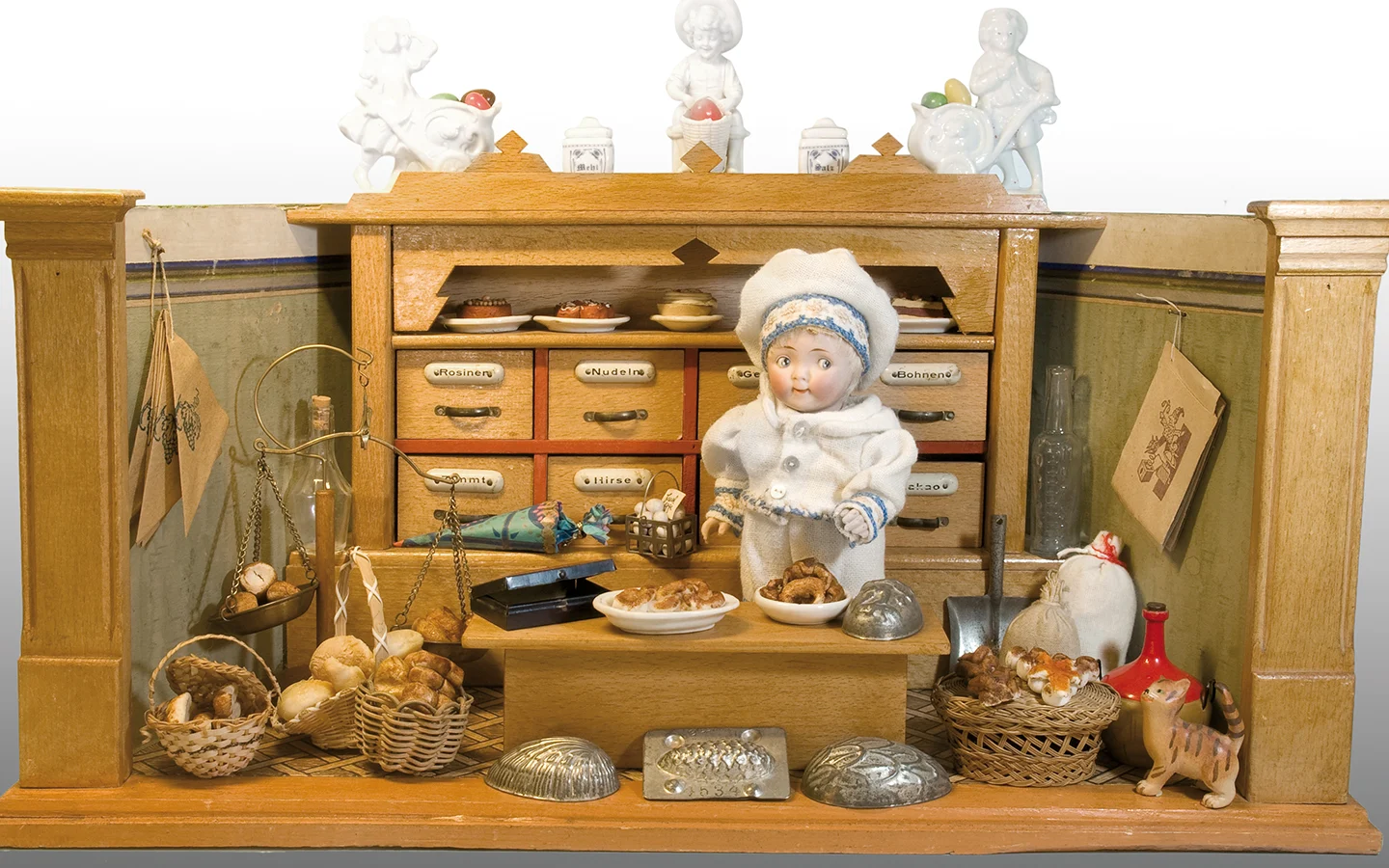
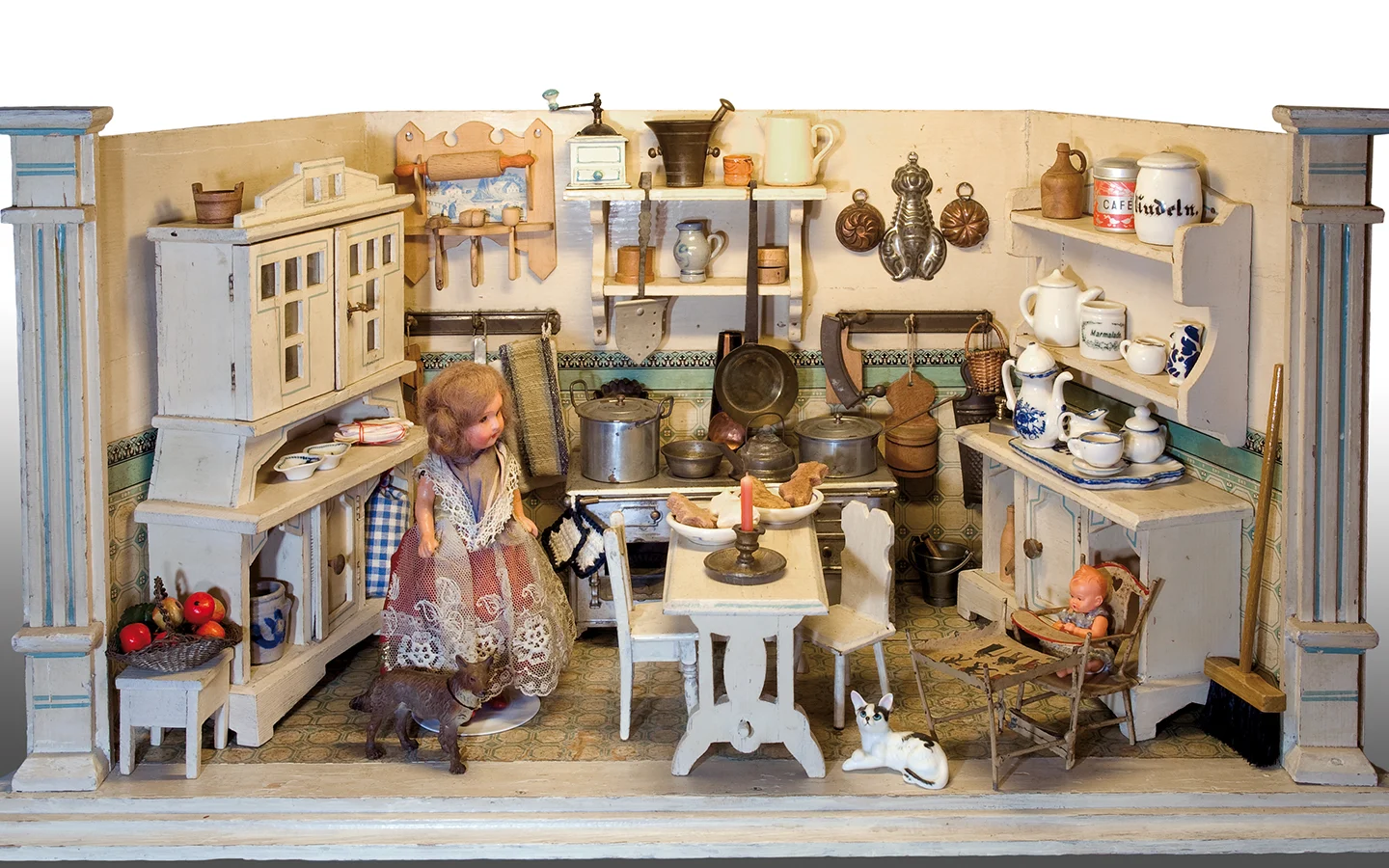
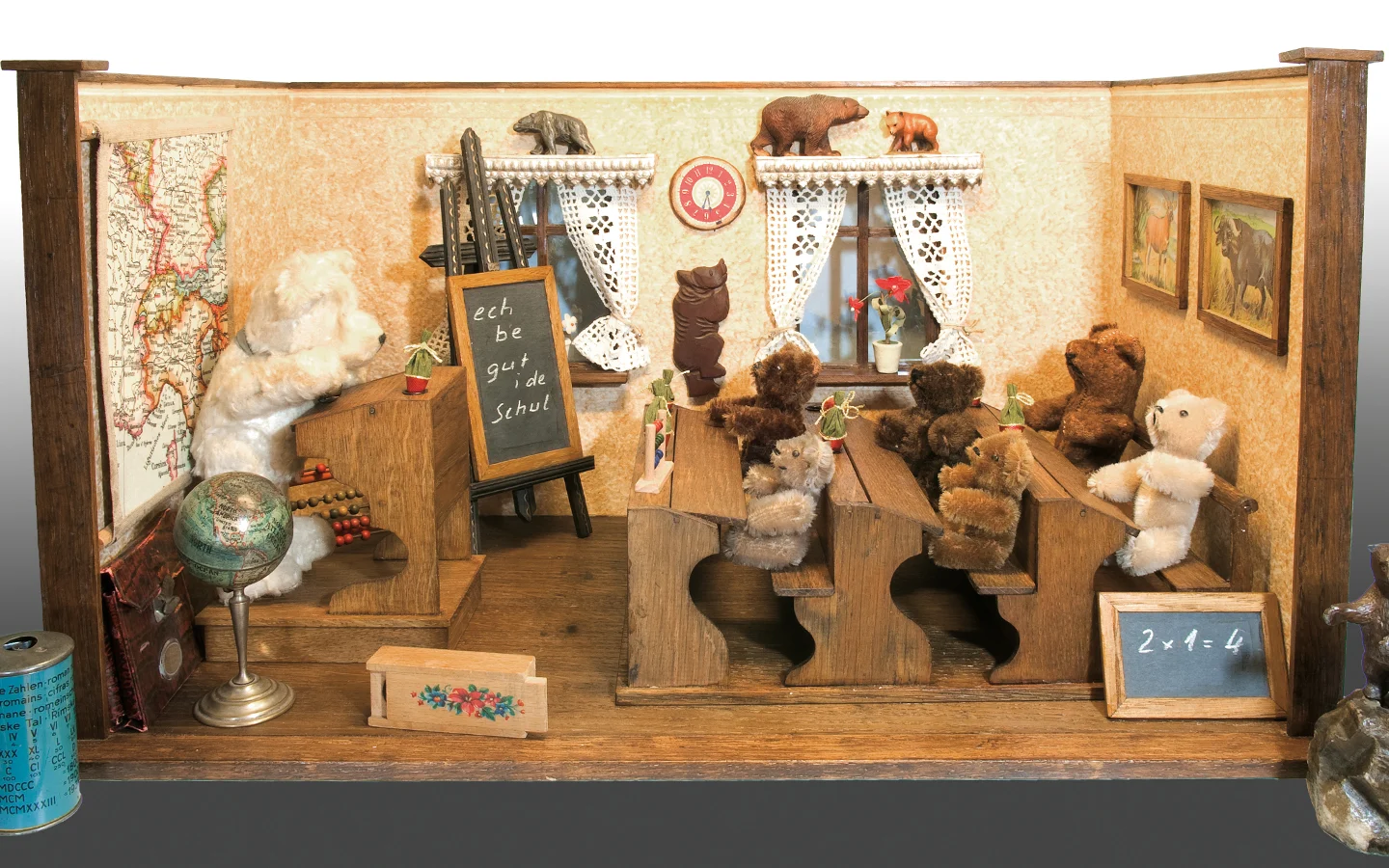
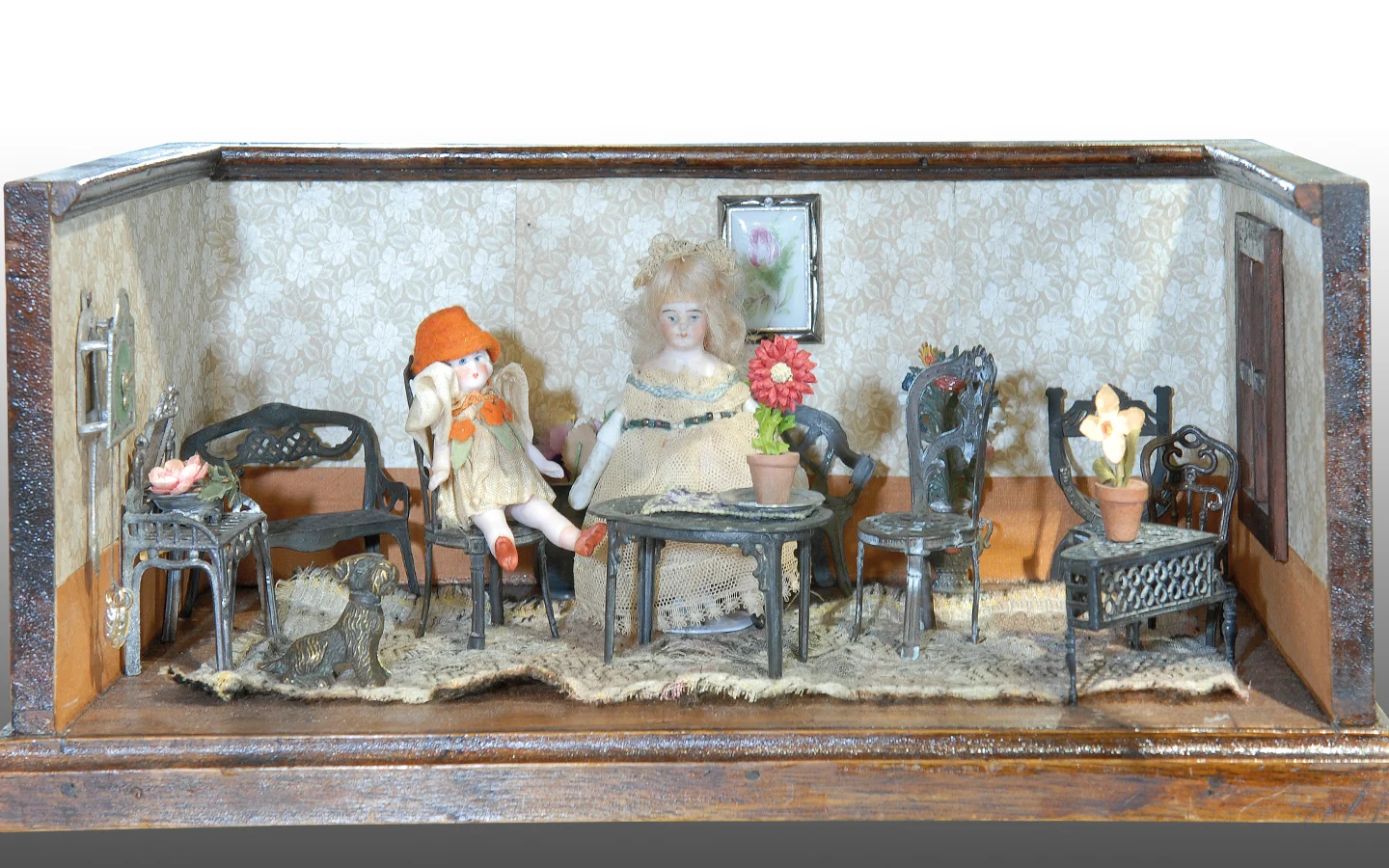
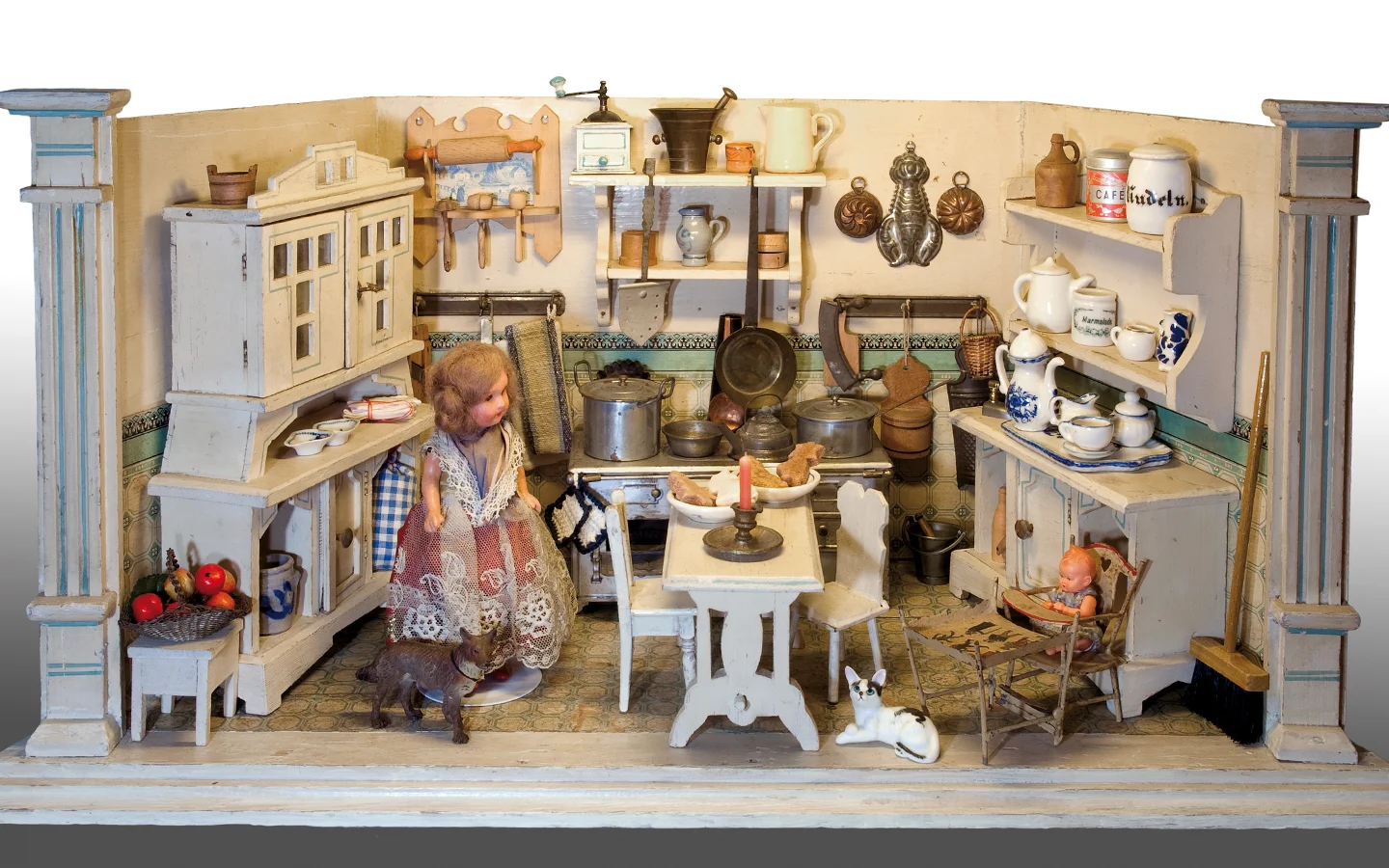
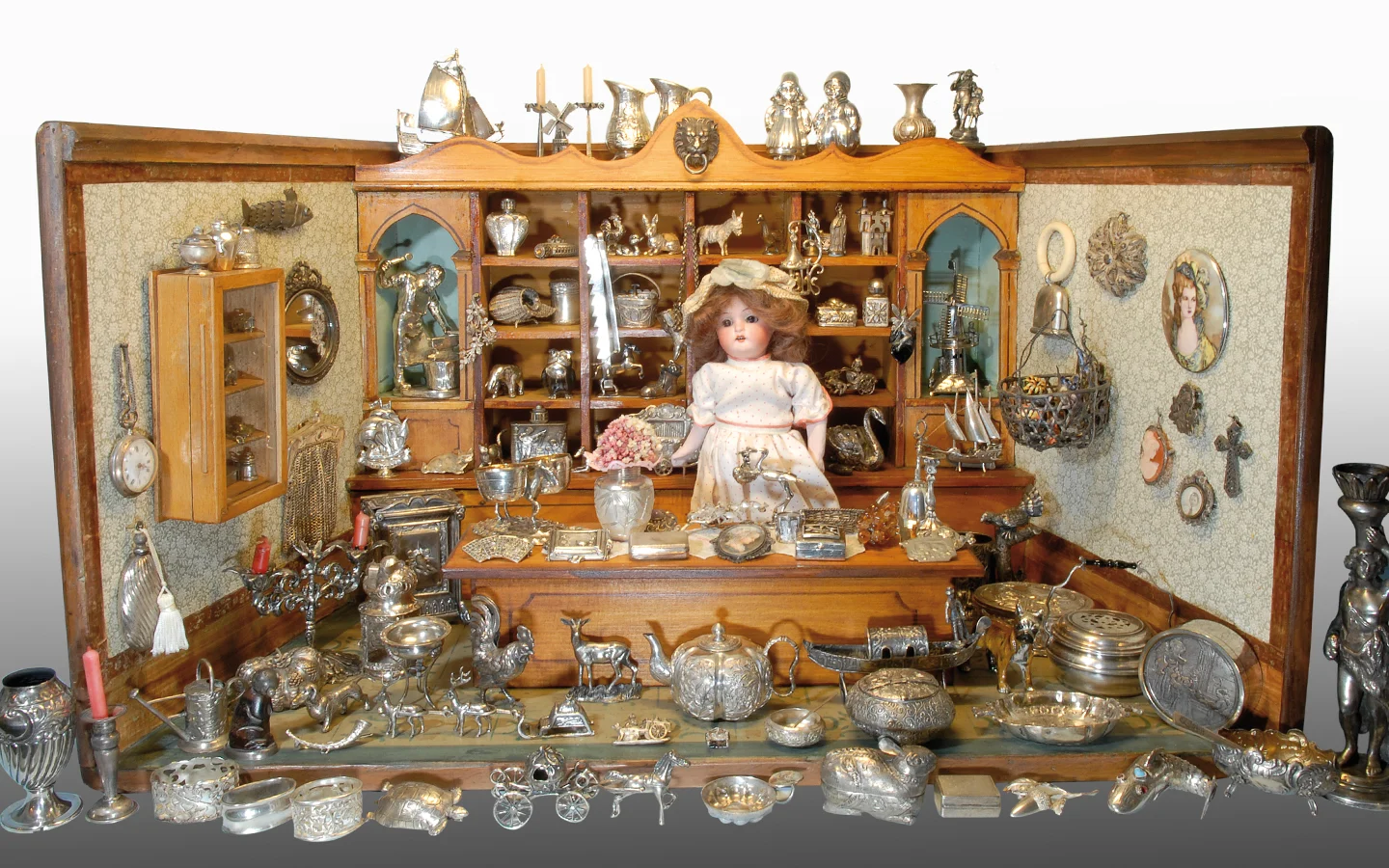
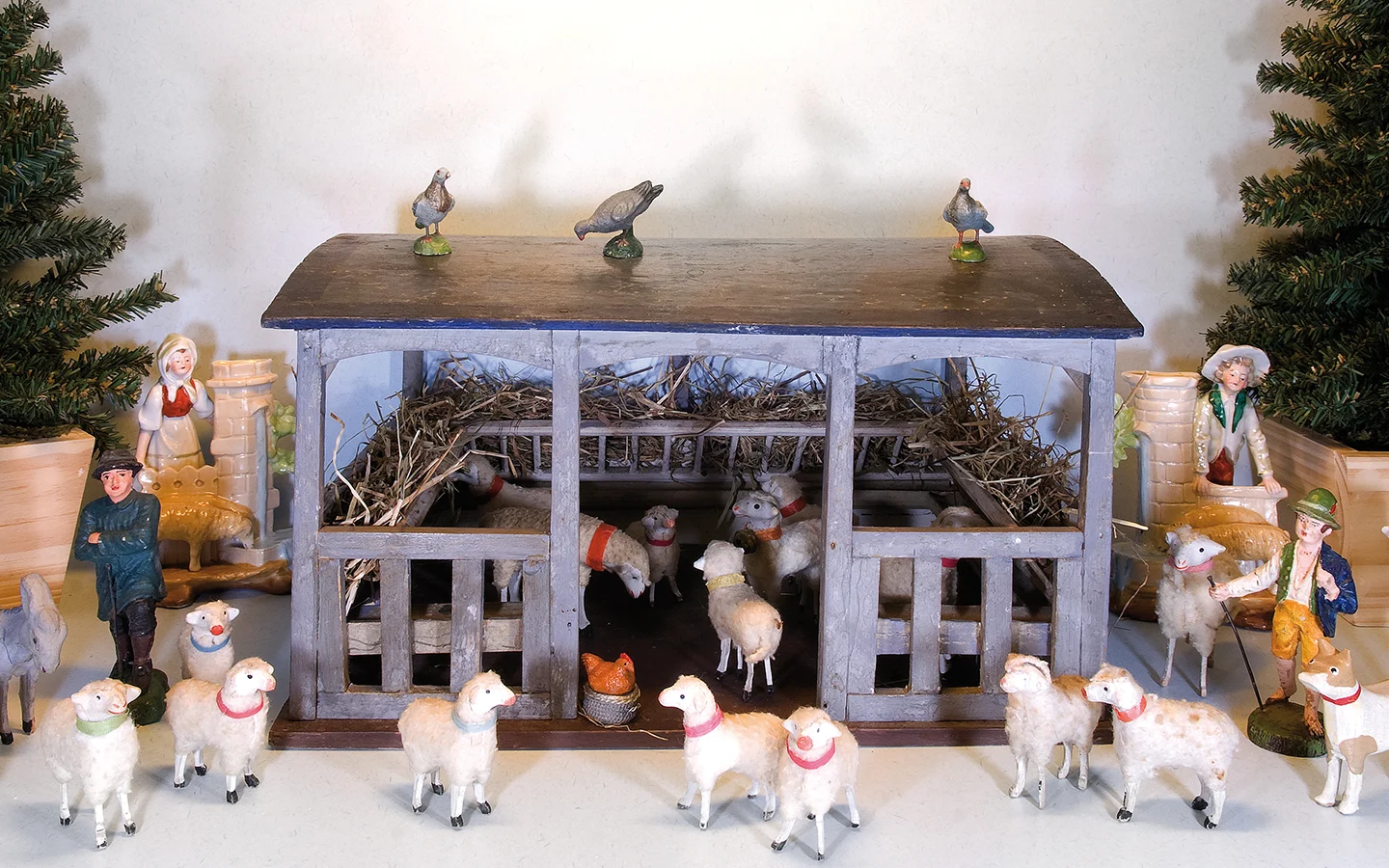
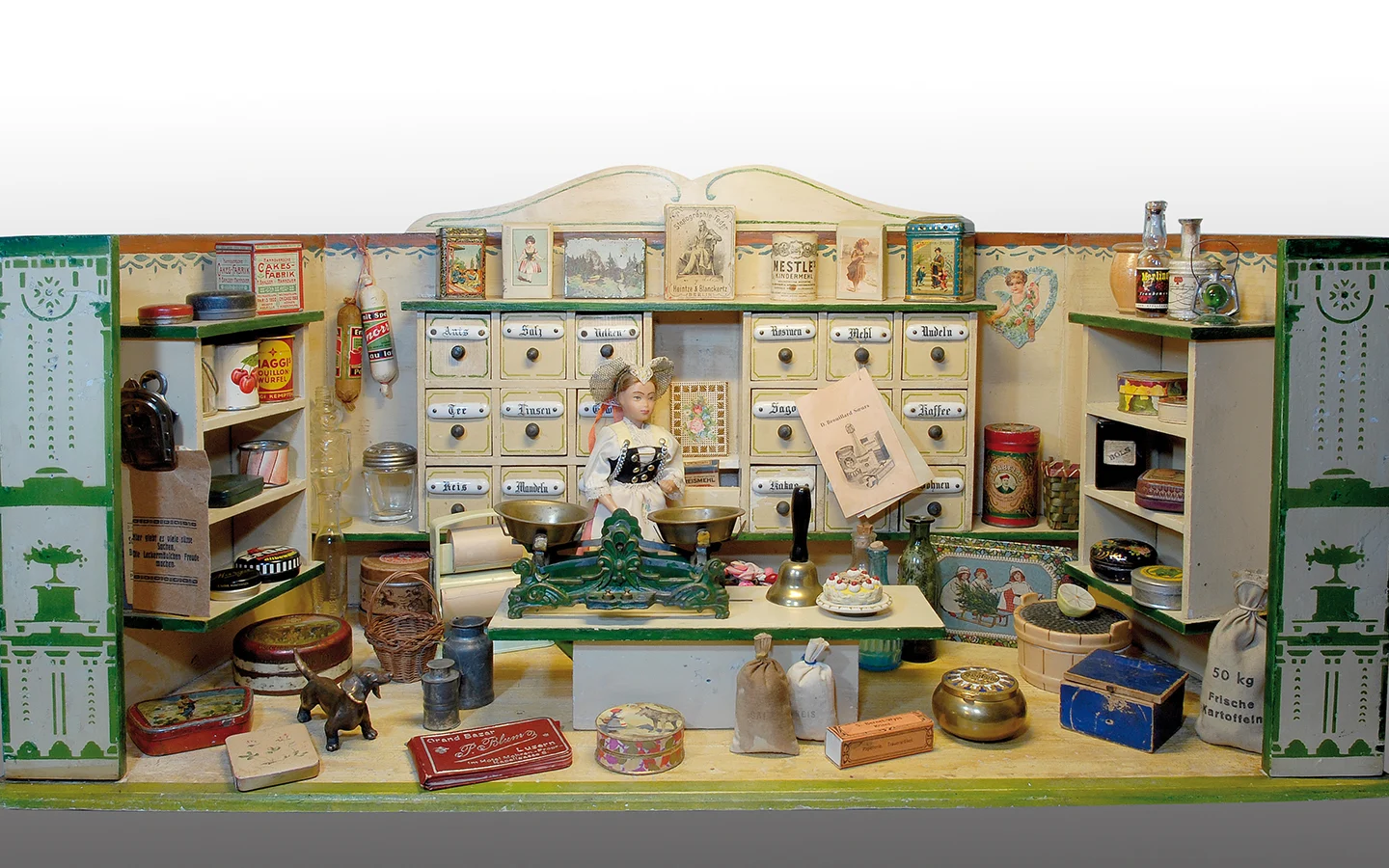
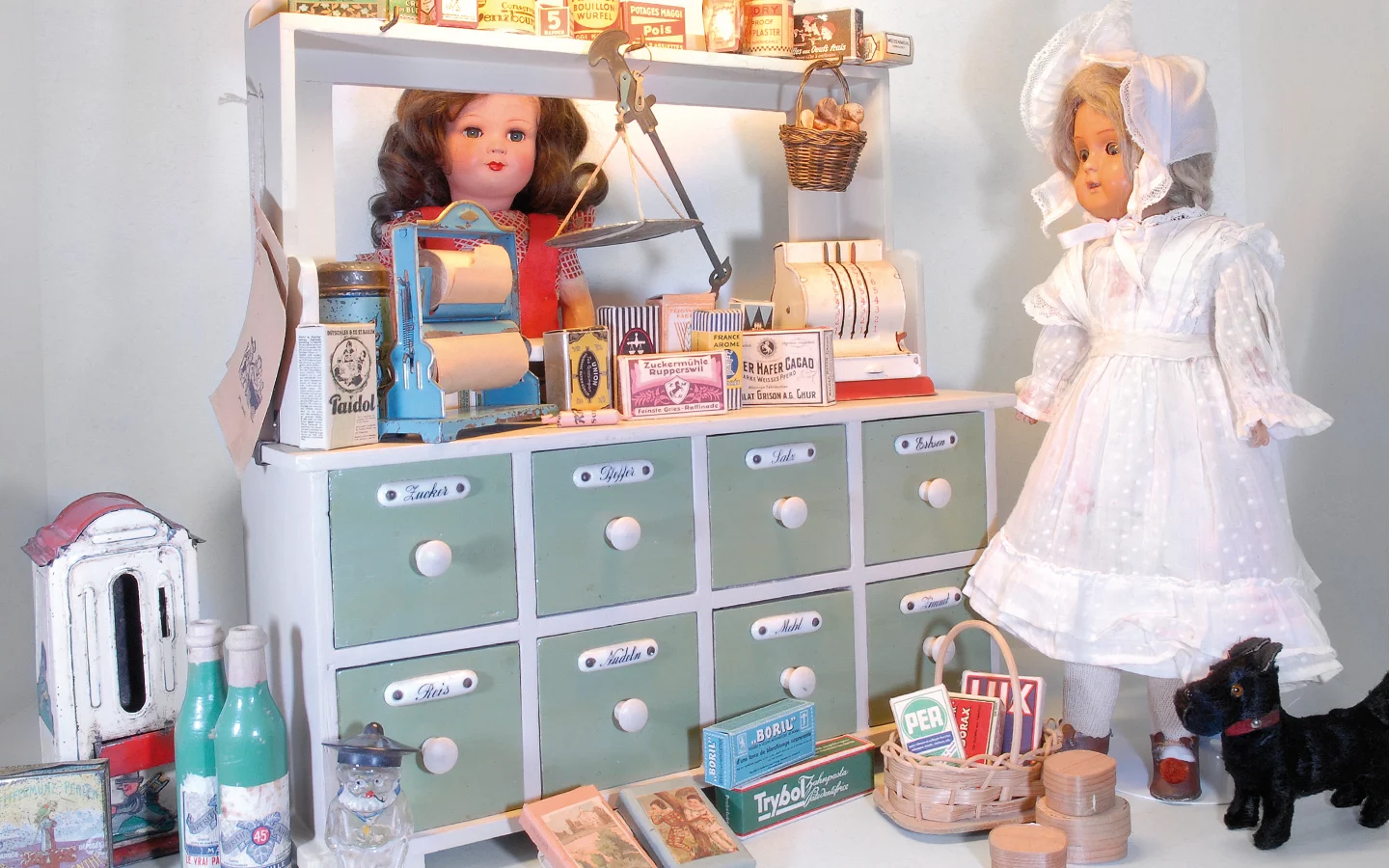
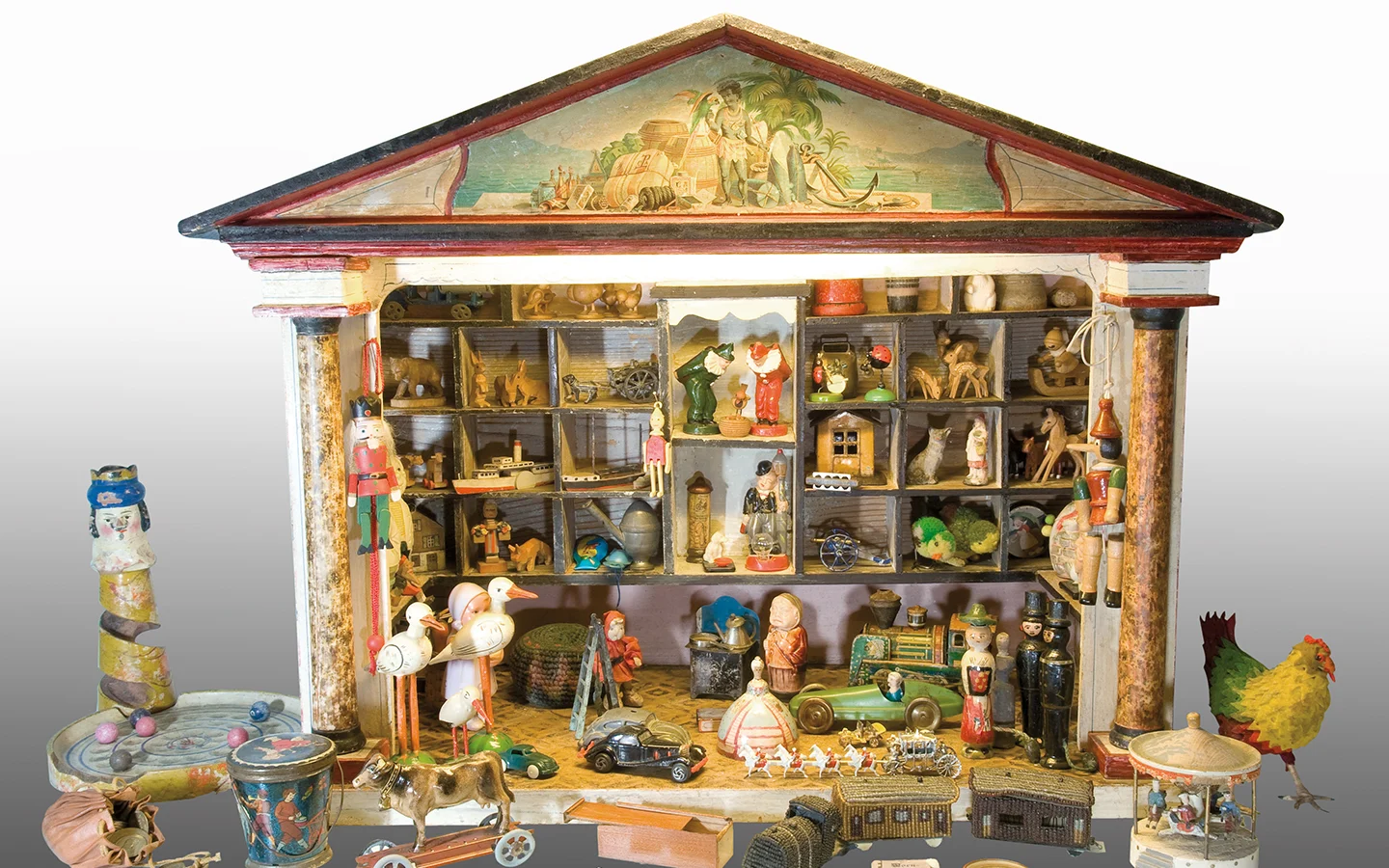
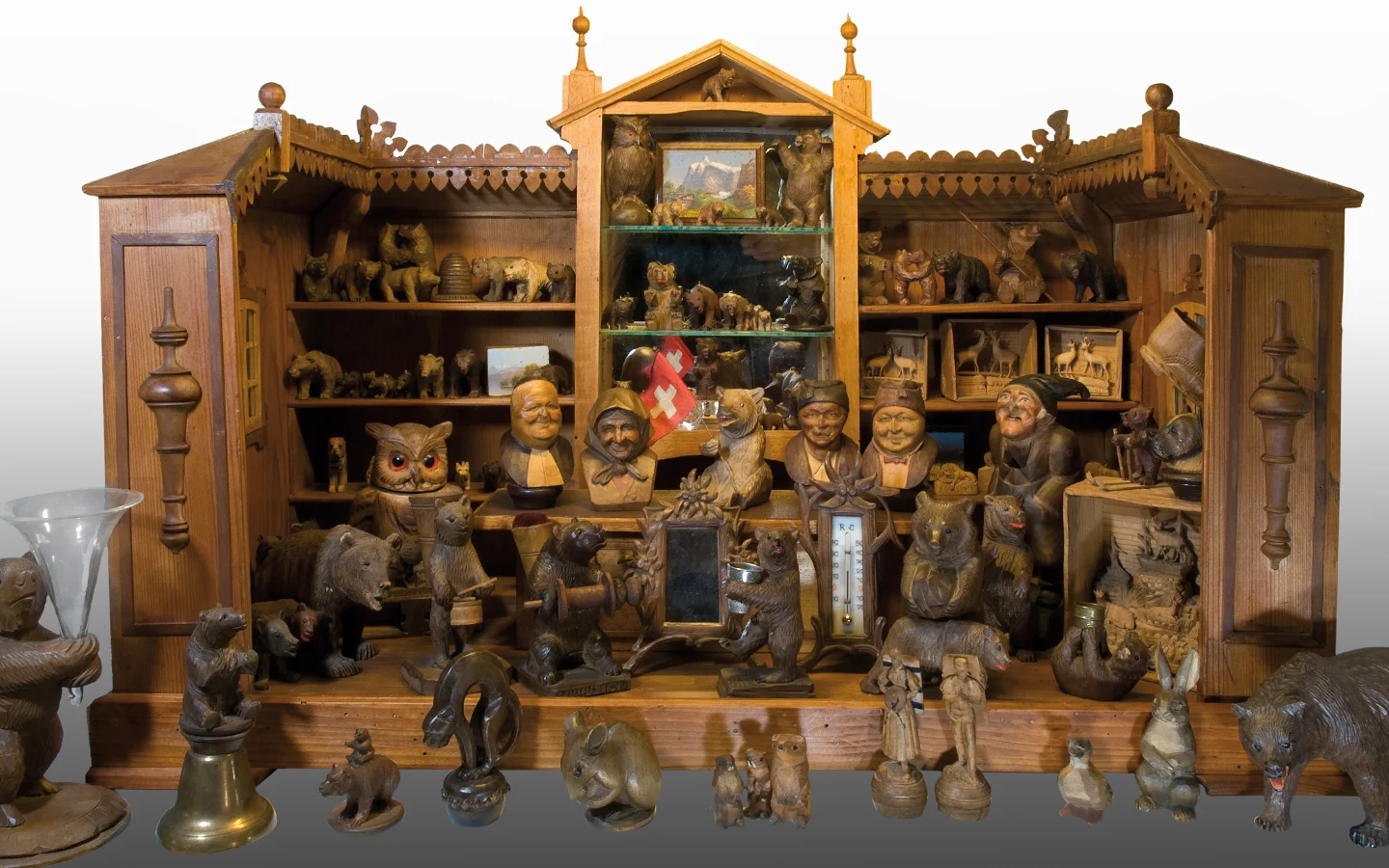
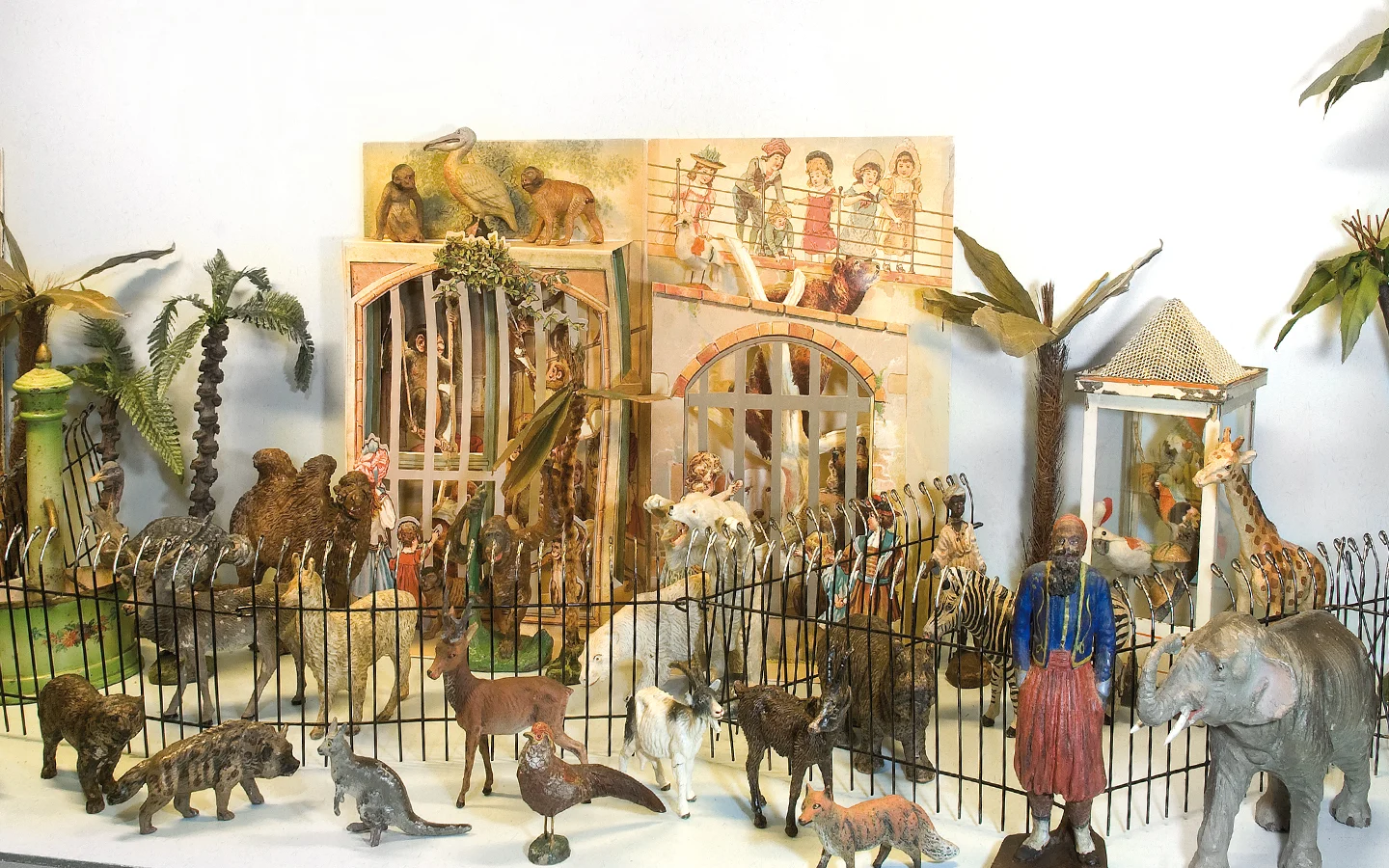
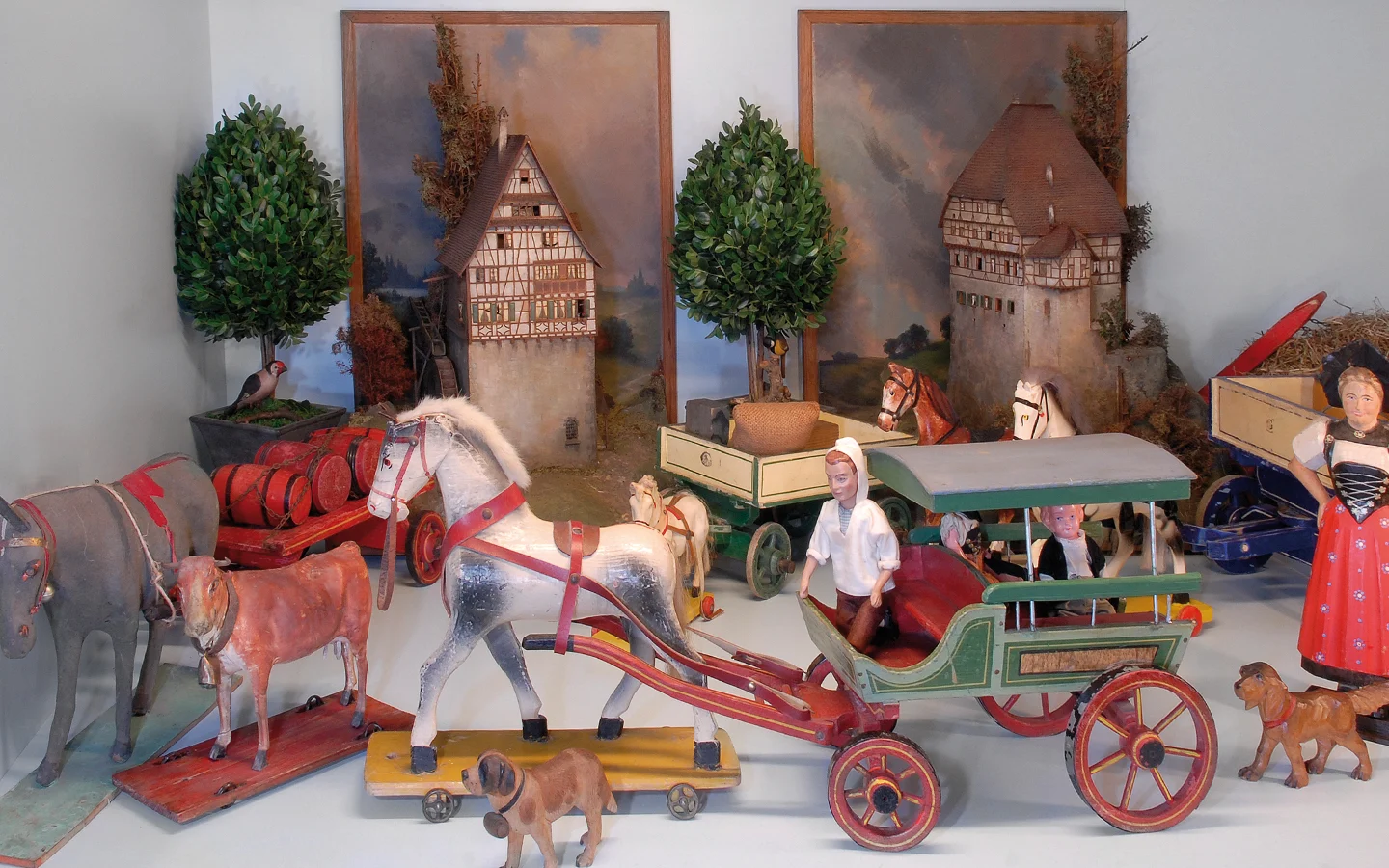
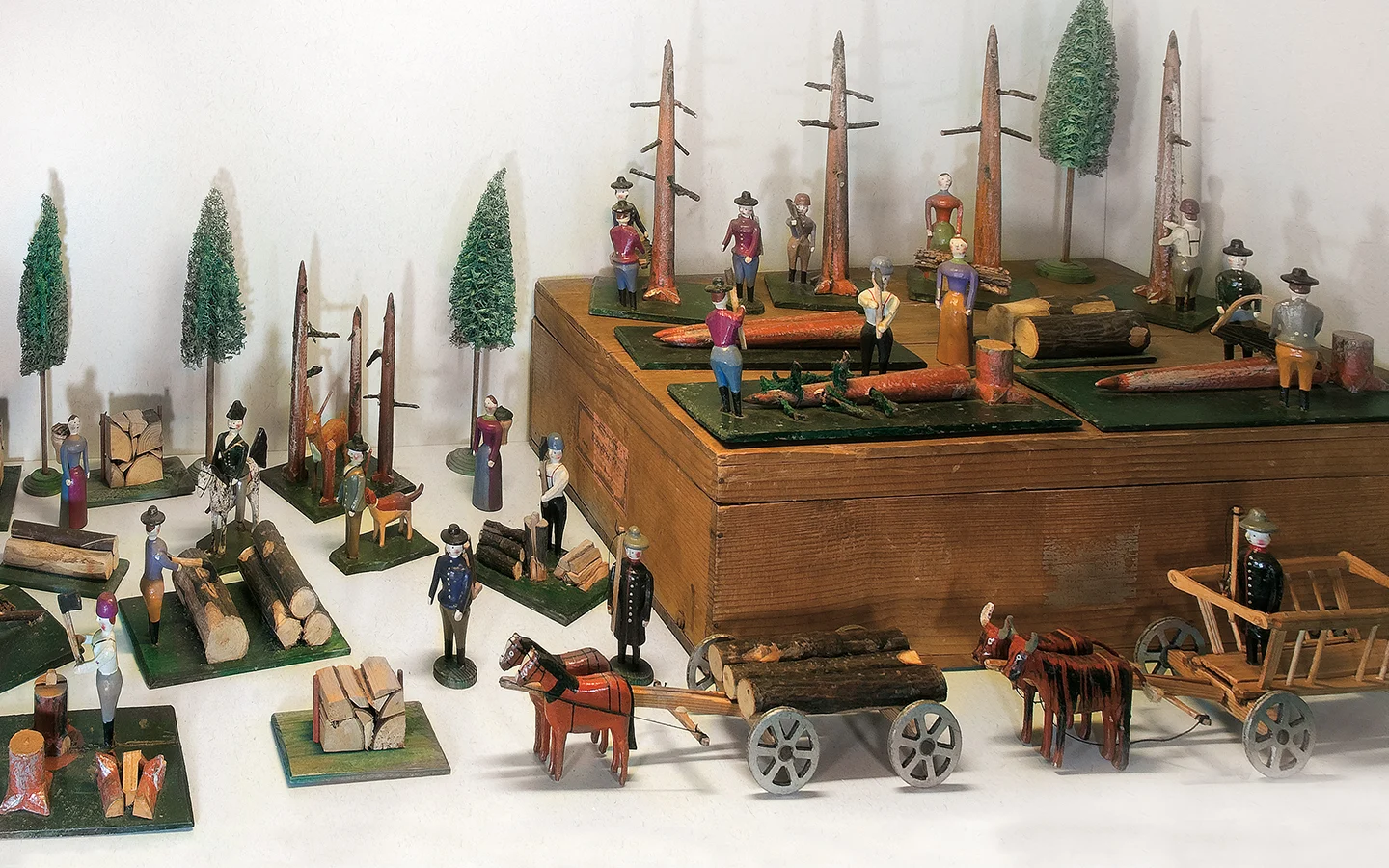
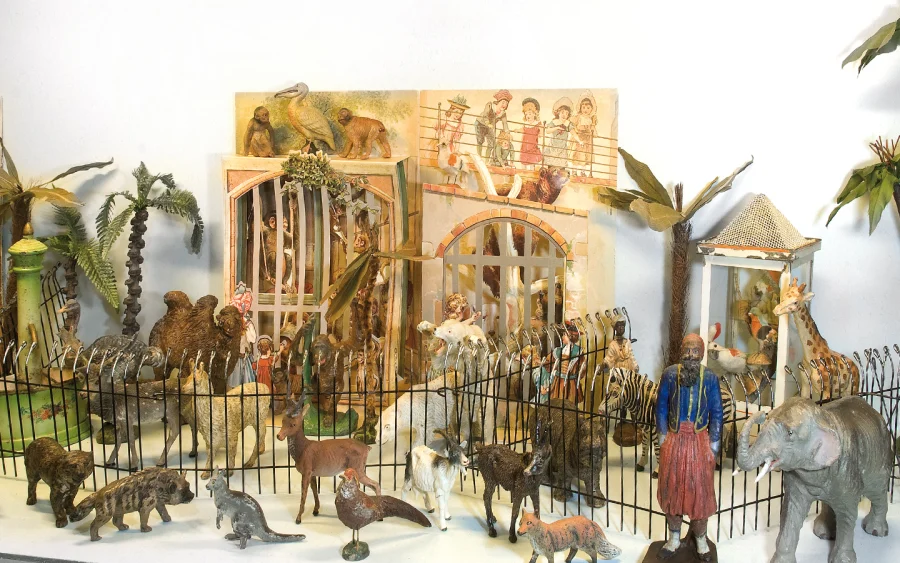
More than one hundred dollhouses are on display in the museum, which opened in 2009. All are intricately furnished with thousands of fitments, exhibiting a veritable “small world in the window”. The small town idyllic showcases living rooms, kitchens and shops. Stately villas and a menagerie with countless animals represent the upper-class lifestyle of its aristocratic inhabitants.

In the shopping lane a diversity of shopkeepers offer their precious goods and delicacies to customers: “May I offer you a bit more?” Country living and cuisine, as well as entertainment provided by the theatre and operetta, convey the illusion of an idyllic past.

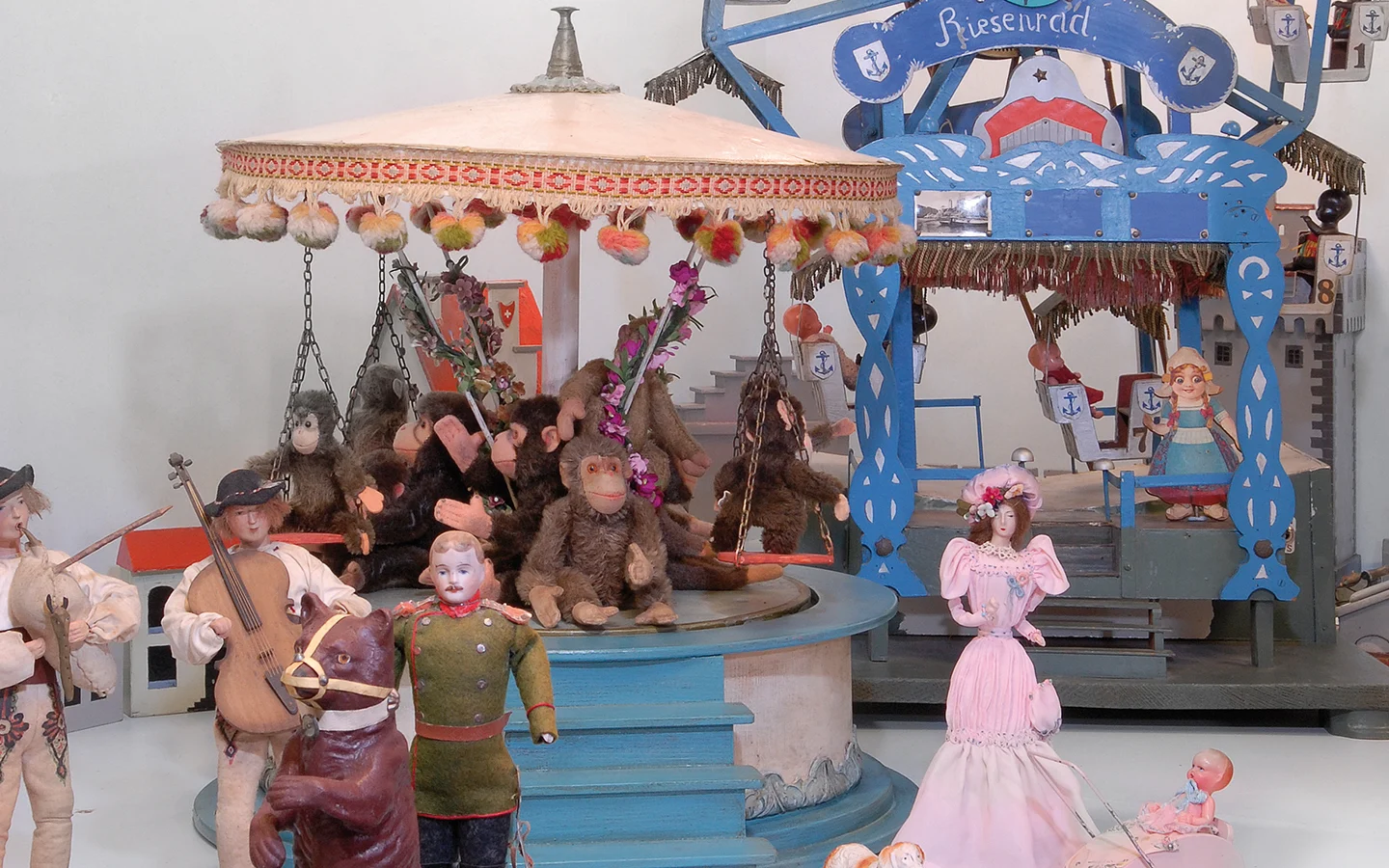
Alongside the market square, the exhibitors have placed a country fair, complete with roundabouts and a Ferris wheel.
Miniature-sized altars placed in a stylized church remind visitors of the original meaning of the Swiss German word for fair: “Chilbi”, which stems from “Kirchweihfest” (church fair). At such altars boys once practiced as ministrants or future priests. In addition, a coach can be seen arriving in front of the palace.

The objects, dating between 1840 and 1930, have been collected by Benno und Rita Allemann for 20 years. Dollhouses, originally built for educational purposes in order for children to practise adult life, have become sought-after objects for collectors.

Interview with Benno Allemann
by Charles E. Ritterband at the Dollhouse Museum Lucerne

The renowned Swiss journalist and bon vivant presents the highlights of his homeland in his new series “Charles E. Ritterband – Best of My Switzerland.”

In this episode, he visits the Dollhouse Museum owned by the Allemann family and talks with the host, Benno Allemann, about the origins and philosophy of this unique institution.

The evolution of dollhouses over time

The history of dollhouses in our cultural sphere is not nearly as old as one might assume - quite the opposite of dolls themselves, whose existence can be traced far back into prehistoric times.

The question of whether such delicate treasures as those seen in dollhouses and toy shops were ever actually intended for children to play with arises time and again. The first dollhouse known to have existed was commissioned in 1557 by Duke Albrecht V of Bavaria. Unfortunately, it was destroyed in the fire that consumed the Munich Residence in 1674. Thanks to a surviving, detailed inventory, we know exactly how it was furnished - including the fact that it already featured a bathhouse.

It was certainly not created for the ducal children. Rather, Duke Albrecht had it displayed in his art chamber in Munich purely as a showpiece. Until the second half of the 18th century, such dollhouses served more to satisfy their owners’ pride than to fulfill any child’s desire to play.

Just as the beautifully detailed historic dollhouses in Basel, Germany, England, and the Netherlands now stand in museums - till out of children’s reach - the pieces displayed in our museum, too, have become collectors’ items for adults, even though many of these houses, kitchens, and little shops were once certainly played with.

Their place is no longer in the nursery; today, they are usually kept safely behind glass cabinets or on bookshelves in living rooms, to the delight of their adult owners - people who perhaps once wished for such a house or play kitchen as a child but never received one. Or perhaps it is the fascination with furnishing and arranging hundreds of tiny objects into a harmonious whole that inspires collectors to acquire these miniatures.

It was only in the late 18th and early 19th centuries that people began to take the needs of the child’s mind into account by granting children space to play. Toys were discovered to be one of the most important tools of education. Play was meant to help children cope with life situations, to imitate and practice everyday activities. Engaging with toys introduced the child to the world of duties and responsibilities that awaited them.

The educator and founder of the modern kindergarten, Friedrich Fröbel, wrote: “Through play, the world is discovered and conquered.” These insights sparked a major boom in toy production. Toys began to appear everywhere in the markets. Goethe, for example, recounts: “It was a pottery market, and not only were the kitchens stocked with wares, but we children were also bought the same utensils for our playful occupation.”

If one reads the 1803 catalog of the Nuremberg toy manufacturer Bestelmeier, under the section for dollhouses, one immediately envisions the large, well-furnished mansion featured in our exhibition:

“A large dollhouse, the front wall of which is fitted with glass windows and curtains, can be opened and closed. The house contains a beautifully furnished room, next to it a bedroom, furthermore a kitchen, below a stable with two horses and a charming carriage to which the horses can be harnessed.”

The same catalog also offers:

“Shops with toys: these contain nearly everything belonging to the realm of playthings—altogether 60 pieces and a saleswoman. The shop has a door that can be opened and closed.”

In addition, there are listings for fabric shops, fashion boutiques, and milliners’ shops.

In fact, it was with such toy shops that true play began. Dollhouses became more modest and were no longer as large, often reduced to just two or three rooms.

The furnishings, however, continued to follow the fashions of their time and thus offer valuable insight into the domestic culture of past eras—making them of great cultural and historical interest. It should be remembered, though, that miniature furniture often broke, pieces were lost, and replacements were added later; as a result, the dollhouses and toy kitchens that were actually played with rarely appear in a pure or consistent style today.

Around 1830, tin toys began to emerge in Germany. The exhibition features mechanical fairground pieces from that era, such as carousels, Ferris wheels, and other amusements, as testimony to this development.

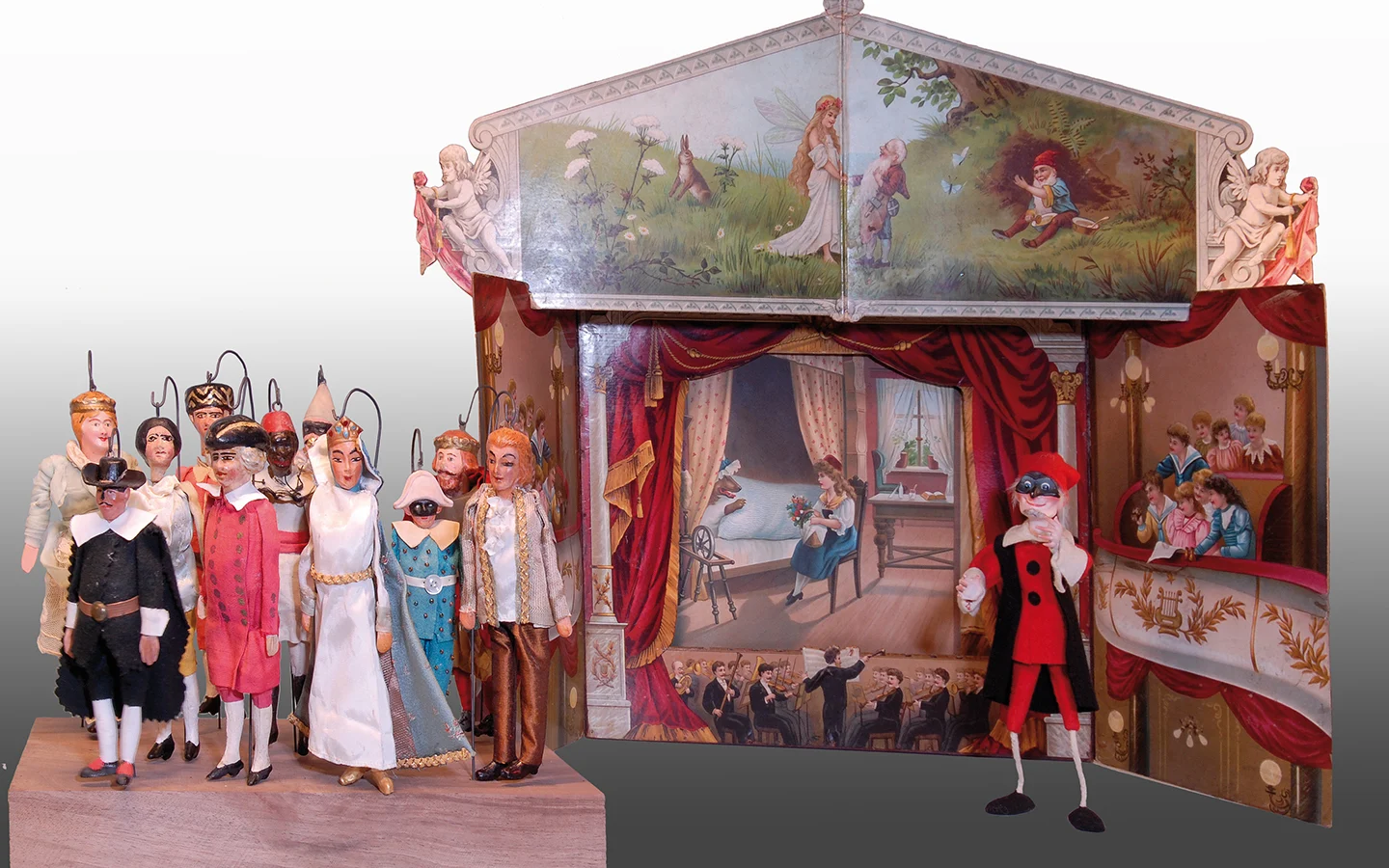
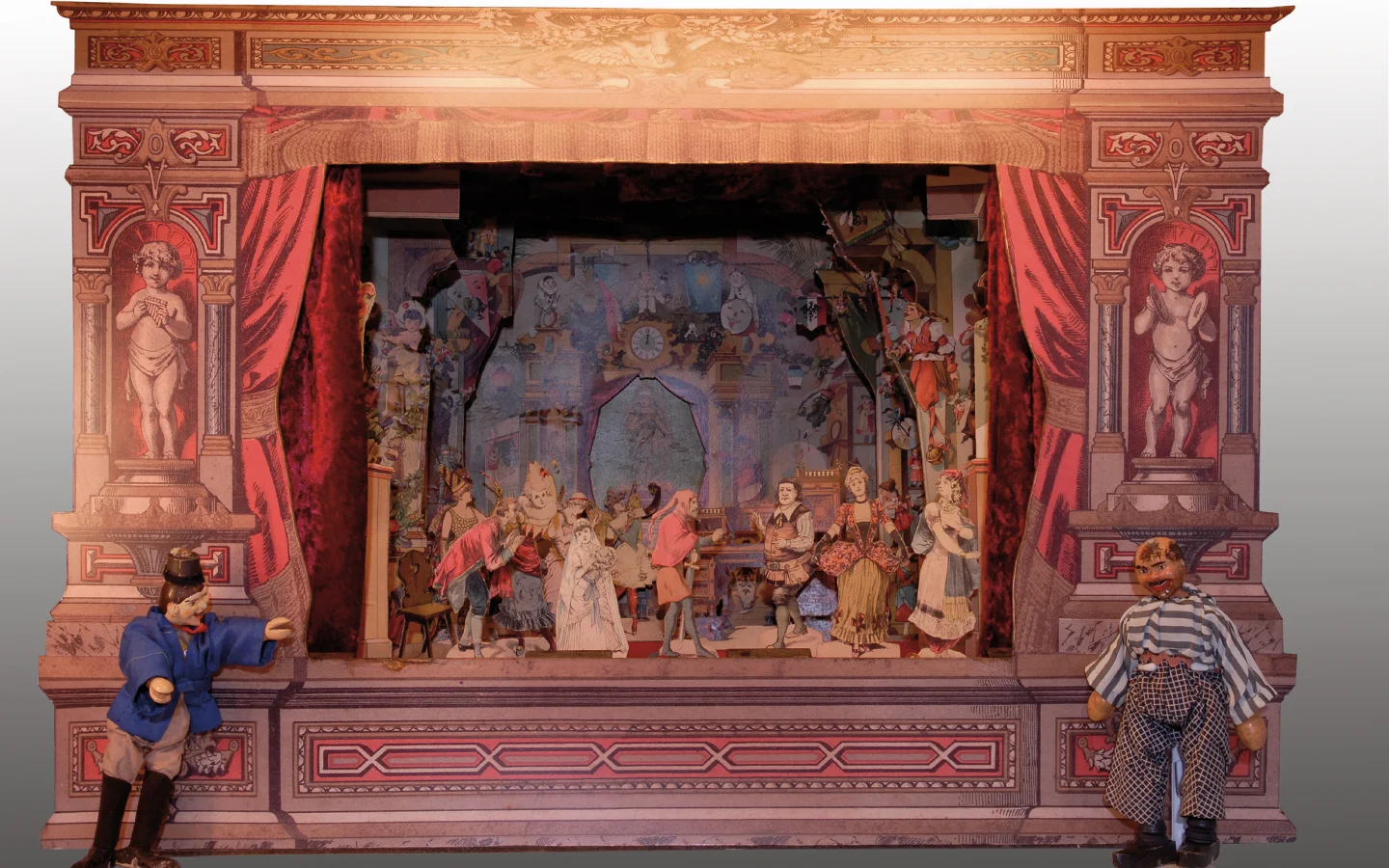
The fascination with paper theaters—two examples of which can also be seen in the exhibition—began in the early 19th century and lasted until the First World War. Their predecessors were peep boxes and cutout sheets.

Playing with these miniature stages reflected the adults’ desire to convey essential elements of literary education to children through small-scale theater. In this way, many works of world literature found their way into children’s rooms, adapted appropriately for young audiences.

To return to the question raised at the beginning: only some of the dollhouses on display were ever actually played with by children.

Annemarie Wick